RhyTempo - Offline Music
- 4.1
- Rating
- 5.00M
- Installs
- Free
- Price

 Analysis by App-foxy
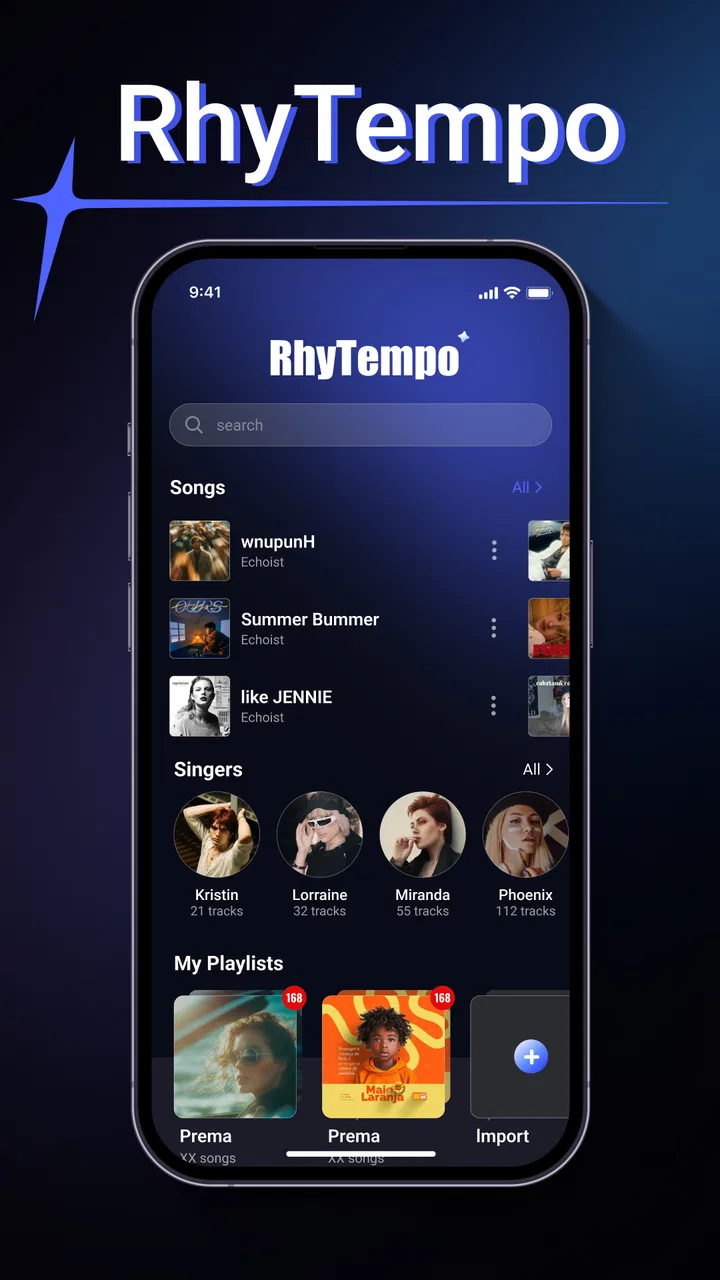
RhyTempo - Offline Music is a free music and audio app from WAKStudios that takes a simple idea and gives it a more personal feel: your listening experience should respond to you rather than treat every session exactly the same. I spent time with it as an everyday player, using it in the situations where a local music app has to prove its value: commuting, working without a connection, putting on background music, and returning to the same albums repeatedly. My first impression was positive because it gets straight to the reason many people still want an offline player. It is focused, lightweight in purpose, and easier to understand than services built around endless recommendations.
The app currently has a 4.6 average from around 200 ratings, and it has passed 100K installs. Those figures suggest that RhyTempo has already found an audience, although they should not be mistaken for proof that it will suit every listening style. It is rated for Everyone, costs nothing to use, and runs on Android 7.0 or later. The current release is version 1.0.3, which also tells me to judge it as a relatively young product rather than as a mature replacement for every established music library.
Why the first week feels promising
The most appealing part of RhyTempo is its narrow identity. It is not trying to be a full streaming subscription, a social network, or a discovery platform disguised as a player. I approached it as a tool for music I already have available offline, and that made the experience feel calmer than the usual alternatives. Instead of being pushed toward new releases or playlists designed to keep me browsing, I could concentrate on choosing something and letting it play.
You May Also Like

 Blood Strike: 2.5 Anniversary
Blood Strike’s Loadouts Turn Every Drop Into a Tactical Gamble
A close look at Blood Strike’s custom loadouts: how fast access to signature weapons reshapes its battle royale rhythm, rewards preparation, and narrows the gap between fights.

 Pandora - Music & Podcasts
Pandora’s Music Is Easy to Start, but Harder to Recover
Pandora’s strength is its low-effort path from a seed to a station. Its weak spot is how much confidence it asks you to place in connection, setup, and quiet recovery.

 8 Ball Pool
 Is Built on Rivalries, Rematches, and Routine
A close look at the rivalries, rematches, shared routines, and unanswered safety questions that turn a quick pool match into a persistent mobile community.

 Samsung Music
’s Quiet Strength Is Playing What You Already Own
Its reach comes less from spectacle than from dependable access to a personal library. That simplicity is both the app’s strongest retention engine and its ceiling.

 AccuWeather: Weather Radar
AccuWeather Review: A Quick, Clear Forecast for Everyday Decisions
For everyday plans, the best forecast is the one you can understand quickly. AccuWeather makes rain timing, radar, and local conditions easy to act on, with a few trade-offs.

 Hill Climb Racing
Why Hill Climb Racing Still Turns Crashes Into One More Run
A tiny car, a bumpy hill and one more upgrade: Hill Climb Racing keeps resurfacing because its simple chaos makes every near-miss feel personal.
More From Our News Desk



That distinction matters more than it sounds. A streaming service is excellent when I want a huge catalogue, but it also makes listening dependent on accounts, connections, changing catalogues, and recommendations. A conventional local player gives me control, but often feels purely mechanical. RhyTempo sits between those experiences. Its personality comes from the idea behind the name and the store summary, “The Music Player That Listens to You,” while its practical role remains that of an offline music player.
During the first few days, I found the app most convincing when I stopped treating it as a place to search for music and used it as a place to return to music. That is an important expectation to set before installing it. If you want immediate access to almost any artist, this is not the obvious first choice. If you already keep music on your device and want a player that feels more attentive than a basic folder browser, the concept makes much more sense.
My most useful early habit was to prepare listening before leaving a reliable connection. Offline apps reward that small amount of planning. I would arrange what I wanted to hear, then use the app during a walk or while travelling without worrying about a weak signal. This also exposed a trade-off: RhyTempo can make offline listening feel intentional, but it cannot remove the responsibility of keeping the local collection organised.
That workflow is particularly good for people who listen to complete albums, personal mixes, or a carefully selected collection. It is less attractive for someone who changes artists constantly and expects a service to supply every track instantly. The app’s value appears when the music is already part of your routine. The novelty is the responsive concept; the practical benefit is having a focused player ready when you need it.
A realistic daily use case
Imagine a weekday commute where the network is unreliable and you do not want to spend the trip scrolling. I would use RhyTempo before leaving, choose a familiar album or a short set of tracks, and let the session run without turning the journey into a search task. On the way home, I might switch to something lighter without opening a streaming catalogue. That is not a dramatic feature demonstration, but it is exactly the sort of repeated moment that determines whether an app earns a permanent place on a phone.
The same pattern works for study sessions and household tasks. I can decide on a mood in advance, start playback, and leave the phone alone. For people who find streaming recommendations distracting, this restraint is a strength. For people who rely on discovery to decide what to hear, it can feel limiting rather than relaxing.
What makes it different from an ordinary local player
The difference is not that RhyTempo turns offline music into a limitless catalogue. It does not replace the source of your music. Its distinction is the attempt to make playback feel more aware of the listener. That idea gives the app a warmer identity than a utility that simply lists files, even though the long-term test is still practical: can I reach my music quickly, start a session confidently, and return tomorrow without extra effort?
I also appreciate that the app is free. There is no purchase decision standing between curiosity and a trial, so it is easy to test it with a real collection rather than judging the concept from a description. That matters for an app whose usefulness depends heavily on personal listening habits. I would not decide after one short launch; I would use it through several ordinary routines and see whether the listening process becomes easier.
What remains valuable after the first month
The first-week appeal comes from trying something that feels more personal than a standard player. After a month, that novelty has to fade. In my view, RhyTempo’s lasting value depends on whether it becomes part of a repeatable offline routine. The app is strongest when I use it as a dependable starting point for music I have already chosen, not as a replacement for every part of the music ecosystem.
That makes it a good match for listeners with stable collections. If your favourite albums stay on your device for months, a focused player can become more useful over time because you stop rebuilding the same listening setup. You learn where your regular music is, which sessions suit a commute, and which choices work as background sound. The app then earns space through reduced friction rather than constant excitement.
A practical way to judge it is to ask three questions after several weeks. Do I open it when I want music without a connection? Do I spend less time deciding what to play? Do I return to it even when I could use a more feature-heavy alternative? If the answer is yes, the app is doing something valuable. If I only open it to experiment with the concept, its place on the phone becomes harder to justify.
The free model helps with that long-term test because keeping the app installed does not require a subscription commitment. Still, free does not automatically mean effortless. My music has to be available in a form the app can use, and my collection needs enough order that I can find what I want. That is the hidden cost of almost every offline player: the user saves money and gains control, but takes on more responsibility for preparation.
Who gets the most recurring value
- Offline-first listeners who regularly spend time with weak or unavailable connections.
- People with a personal music collection who prefer familiar albums and playlists to algorithmic discovery.
- Listeners who want a calmer alternative to streaming apps filled with recommendations and extra content.
- Anyone using an older Android phone that still meets the Android 7.0 requirement and wants to try a free player without a large commitment.
I would be more cautious about recommending it to someone whose main habit is discovering new music every day. Streaming services remain better for broad catalogues, editorial playlists, and instant access to artists outside your own collection. I would also hesitate if your music is spread across several services or depends on cloud access. RhyTempo’s offline identity is an advantage only when offline listening is actually part of your life.
Small workflows that improve the experience
My first tip is to create a simple “ready to play” habit rather than trying to organise every song perfectly. Keep a few dependable albums or listening groups easy to reach, then add new music when you have time. This prevents the maintenance task from becoming so large that it defeats the app’s convenience.
My second tip is to use different preparation styles for different situations. A commute benefits from a selection that can run without attention, while focused work may need a longer, consistent sequence. Thinking in sessions rather than individual tracks reduces the temptation to keep checking the phone. That is where an offline player can quietly improve concentration.
My third tip is to treat RhyTempo as a deliberate listening tool, not as a universal music destination. Start it when you already know the kind of session you want. If you open it while undecided and expect the app to solve the entire problem through discovery, you may judge it unfairly. Its strength is helping a prepared choice become a low-interruption habit.
Maintenance, fatigue, and the limits of the idea
The main maintenance burden is not difficult to understand, but it is easy to underestimate. An offline library needs attention. Music must be available locally, the collection must remain reasonably tidy, and the listener has to refresh it when tastes change. RhyTempo can make playback more pleasant, but it cannot make an unmanaged library organise itself by magic. For some people, that control is satisfying. For others, it is exactly the work they hoped a streaming service would handle.
This is where the app’s long-term appeal may split users into two groups. I enjoy the feeling of owning the listening process, especially when I know I will be away from a stable connection. Someone else may see the same process as an unnecessary chore. Neither reaction is wrong. The right choice depends on whether preparing music feels like a useful ritual or an obstacle.
There can also be fatigue in the app’s central promise. A player that “listens” to you sounds engaging at first, but the idea needs to keep producing practical benefits after the first few sessions. If the experience eventually feels like a normal player with a more interesting identity, some users may move back to a familiar alternative. That is not a failure, but it means the app must win through repeated convenience rather than its concept alone.
Another source of fatigue is comparison with mature music services. Those services are usually better when I want search, discovery, cloud synchronisation, or a catalogue that changes constantly. A basic local player may also be preferable for someone who wants the most direct possible file management. RhyTempo has to justify itself in the middle: more personal and engaging than a bare-bones player, but more focused and independent than a streaming service.
I would also avoid installing it solely because the rating looks strong. The 4.6 average is encouraging, and the install base shows meaningful interest, but ratings cannot predict how well an offline workflow fits an individual. My own recommendation would be based on listening behaviour: if you already value local music, the free trial is worthwhile; if you rarely listen offline, the app may not change much for you.
Questions I would ask before keeping it installed
Does it make sense for a new listener? Yes, if that listener already has music stored locally and wants a focused way to play it. No, if “music” mainly means browsing a massive online catalogue. The app is a player first, so its usefulness starts with the music you can actually bring into that offline routine.
Is it suitable for an older device? The stated minimum is Android 7.0 or later, which covers a broad range of Android phones. I would still judge comfort by the phone’s general condition and by how well your personal library is maintained, rather than assuming the operating-system requirement alone guarantees a perfect experience.
Can it replace a streaming subscription? For offline playback of a personal collection, it may reduce how often you need one. It is not the better choice when your priority is unlimited discovery, online catalogue access, or recommendations that constantly introduce unfamiliar artists. I see it as a complement or an alternative for a specific listening style, not a universal substitute.
Will it remain useful without daily attention? It can, provided your collection is already prepared. The best long-term setup is low maintenance: keep a manageable group of music ready, update it occasionally, and let the app handle the listening session. If you need to reorganise everything every time you want to play music, the routine will become tiring.
Does the app suit every mood? Not equally. It is strongest for planned, familiar, uninterrupted listening. It is less convincing when I want the app to surprise me with a broad range of new music. Knowing that boundary prevents disappointment and makes the app easier to evaluate fairly.
My long-term verdict
After the initial curiosity fades, RhyTempo - Offline Music still has a clear reason to exist. Its lasting appeal is not unlimited content; it is the possibility of making personal, offline listening feel more intentional and less cluttered. I like that the app encourages me to decide what I want to hear, start a session, and stop treating music as another feed to scroll.
WAKStudios has made a promising early entry in the music and audio category. The free price, Everyone rating, broad Android compatibility, and version 1.0.3 release make it approachable for a practical trial. I would keep expectations realistic because a young, focused player should not be judged by the same standards as a large streaming platform with a completely different purpose.
My recommendation is simple: install it if offline music is already important to you and you want a more attentive alternative to a plain local player. Give it enough time to pass the novelty stage, then judge whether it has shortened the path from “I want music” to “music is playing.” That is the habit that matters.
I would skip it if your favourite part of listening is discovering an endless online catalogue, or if maintaining local music feels like work you do not want. For everyone else, RhyTempo is worth trying precisely because its value is easy to test in real life. Use it on a commute, during a work session, and on a day without a reliable connection. If those repeated moments feel smoother, it has earned its place. If not, a conventional player or streaming service will probably serve you better.
FAQs for RhyTempo - Offline Music
01What is RhyTempo - Offline Music and how does it work?
RhyTempo - Offline Music is an app that allows users to download and play their favorite tunes without needing an internet connection. It offers a user-friendly interface where you can easily search, organize, and manage your music library. The app supports various audio formats, ensuring compatibility with most music files.
02Can I create playlists in RhyTempo - Offline Music?
Yes, RhyTempo - Offline Music allows users to create personalized playlists. You can easily add songs to a playlist by selecting them from your library. This feature helps you organize your music by mood, genre, or any other preference, making it simple to find and play your favorite tracks.
03Does RhyTempo - Offline Music consume a lot of device storage?
The app itself is lightweight, but the storage consumption depends on the number and size of the music files you download. RhyTempo provides options to manage storage efficiently, such as setting download quality and deleting unused files. Regular maintenance can help keep storage usage optimal.
04Is RhyTempo - Offline Music free to use?
RhyTempo - Offline Music offers a free version with basic features. However, there is also a premium version that provides additional functionalities such as ad-free experience, enhanced audio quality, and advanced playlist management. Users can choose the version that best suits their needs.
05How can I ensure my downloaded music is high quality in RhyTempo?
To ensure high-quality downloads, RhyTempo allows users to select their preferred audio quality settings. Before downloading, you can choose from options like standard, high, or lossless quality. Keep in mind that higher quality files will take up more storage space, so balance quality with available storage.
Pros
- Easy offline music access
- Minimal battery usage
- User-friendly interface
- Customizable playlists
- No ads in offline mode
Cons
- Limited to local files
- No streaming capability
- Basic audio settings
- No social sharing features
- Updates are infrequent

RhyTempo - Offline Music
Gallery